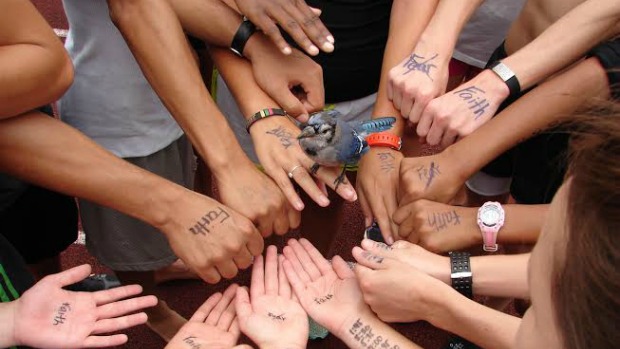
“Here’s to the crazy long distance runners, the rebels, the round pegs in the square holes… because the ones, who are crazy enough to think that they can improve by increasing their knowledge about running, are the ones who seem to have PR’s.” Henry Ford once said after he invented the Model T,”If I had asked the public what they wanted they would have told me a faster horse”. If the majority of runners were all made the same, we’d be very rich coaches right now. Over the course of my 30 plus years of my coaching career in the sport of Cross Country and Track, I’ve learned that the path to runner’s success often entails navigating uncertainty. Countless variables contribute to day-to-day uncertainty for the athlete, parents and from school administration. Changes to athlete’s family and home transitions to economic instability. When facing such challenges, coaches must proactively and transparently steer their athletes toward progress regardless of outside distractors, and differentiate the workout with the long term goal of the team and the individual runner. I joined LinkedIn.com in 2013 when the professional coaching network was just learning to communicate with each other instead of against each other, as were other coaches across the country. Coaches were learning to share their successes online and compare them to others that have had the same successes using the same kind of training theories. When I assumed the role of head cross country coach in 2011, I focused on forging an “All In” mentality that would unite current parents and runners’. Setting the future ground work for future runner’s and parents coming into the program with a common purpose. By connecting the value of our individual coaching philosopy to the team’s overarching mission, getting to state. By creating higher goals for the team, we created a guide in a positive direction. As I continued to lead cross country team’s through a period of transformation, maintaining an “All In” mentality always remained one of my top priorities. Here are three cornerstone elements of how I adopted this approach:
1. Define Your Team’s Purpose at Camp
There is a saying that Steve Jobs the inventor said before Apple’s grand introduction of the IPhone. That you need to eat your own lunch before someone else does. Knowing full well the IPhone would and did cannibalize the sales of the flagship iPod. Letting go of the familiar and embracing the unknown is a real test of leadership. During times of coaching uncertainty you at times will eat your own lunch; coaches must clarify and reinforce the purpose to athletes and parents if the team is having poor performances. Everyone should realize the long-term goal of your training model and understand how it will improve the overall team’s success. As an example, I always remind my parents that we are working to ensure that runners have access to training options that enables them to stay within their goal. Defining a training purpose may seem obvious, but consistent reinforcement can support crisper execution of the training model and improved morale. Everyone should know that they are contributing to the team’s success. My former coach Jerry Slaven at USF was very good at making every runner feel as if they were a major reason why the team was successful, not just to the few elite runners that were on the team.
2. Measure and Highlight Success PR’s during the season
When a team is navigating uncertainty through the season, it is the most important time to measure and highlight the results generated by its runner’s. Help them visualize how their individual contributions are making an impact by creating an excel sheet with their times from each meet. This not only supports morale, but also provides a subtle reminder that everyone is accountable for results. Creating a team excel sheet that shows varied progressive improvements throughout the year. Goal oriented training schedules that shows at different times during the season this is where they should be. Highlight the PR’s over time and show times from when they entered the program, and where they are now. You want your runner’s and parents to see how their collaborative improvements are supporting the team goal. Regularly provide internal updates on the goals you have established together from running camp. Also share external Progress reports to parents so they can track their runner’s progress.
3. “All In” Mentality of the Blowing Rock Trails Camp
I’ve found that transparent communication is the lifeblood of a successful team, particularly while coping with uncertainty during the season where there was a miscommunication. Coaches need to communicate frequently and openly with parents about strategy, expectations, goals and any challenges that they are anticipating. The key is to earn the unified support that a coach undoubtedly needs during uncertain times. If the coach wants commitment and loyalty, he needs to establish a relationship with parents through an open dialogue. This can be facilitated with meetings, blog posts, hard copy handouts, video updates and everyday interactions. Our “All In” mentality at the Blowing Rock Trails Camp is pivotal and significant step for a team in mentality and attitude.
Note: Coach Mirones is a three time Cross Country Coach of the Year in Hillsborough County Western Conference Championships 1979-1993-2013.
Say hello to my little friend; The Stop Watch